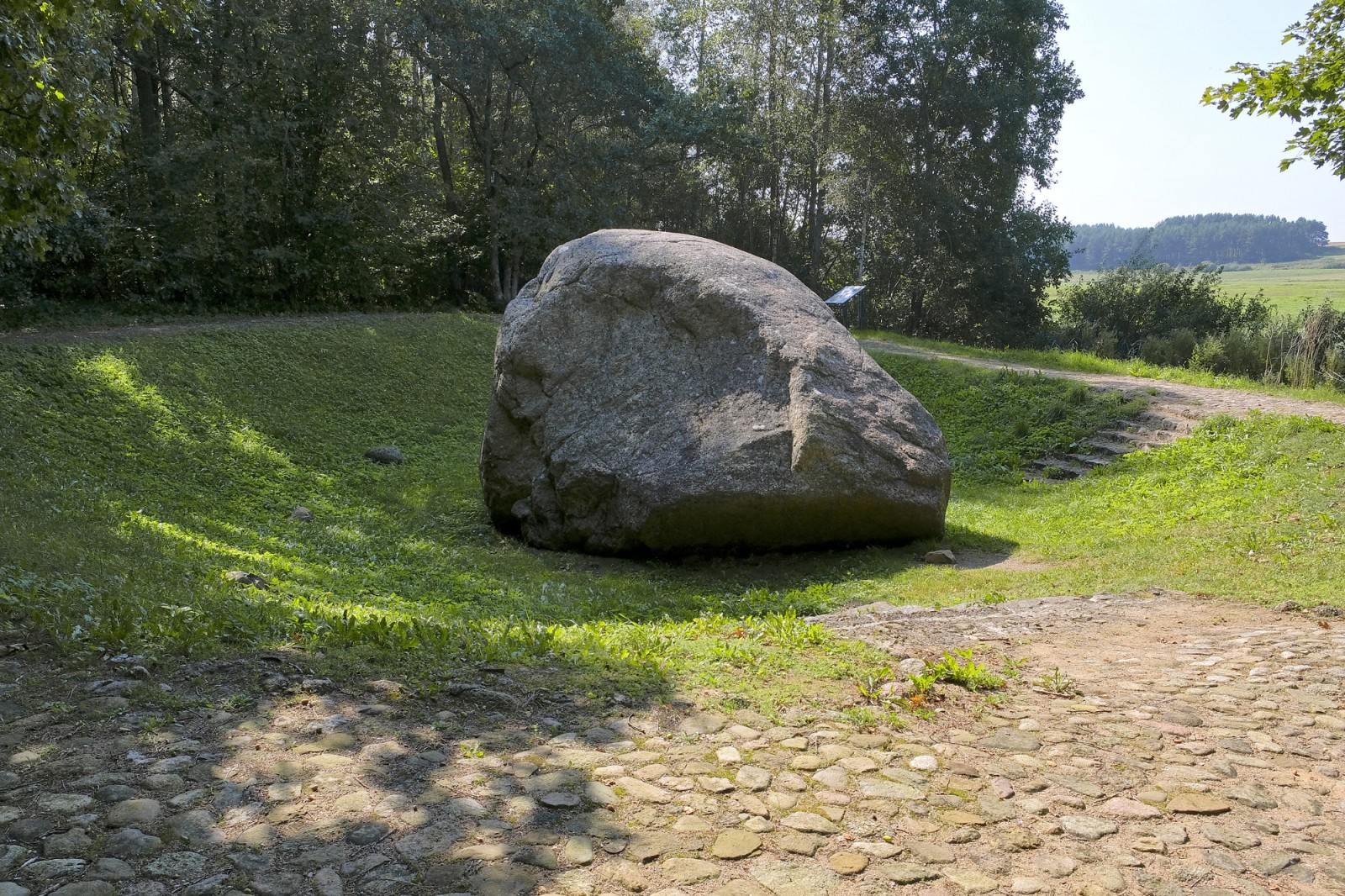
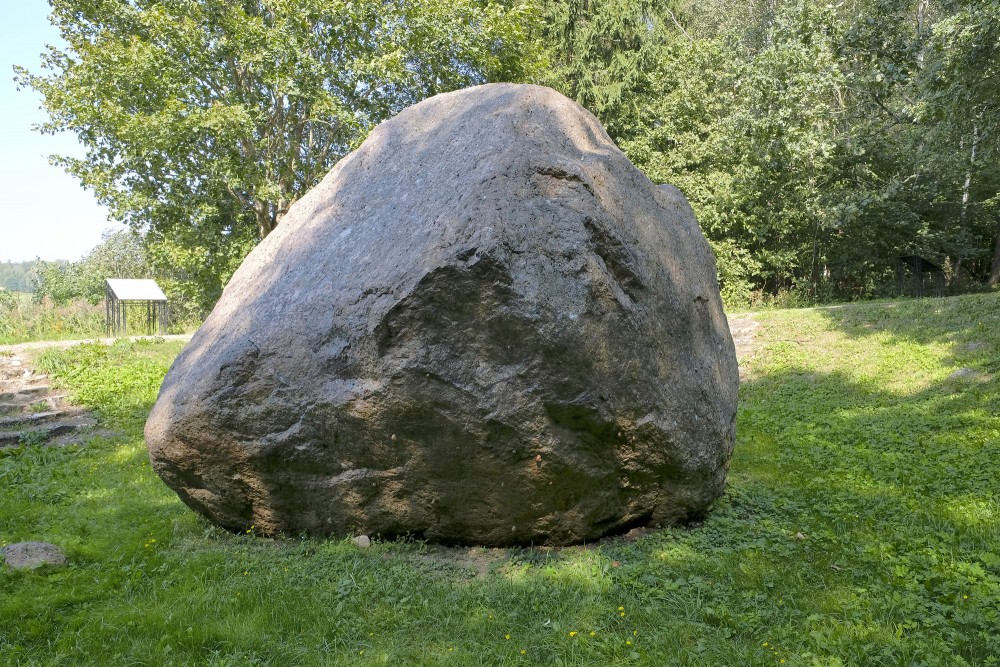
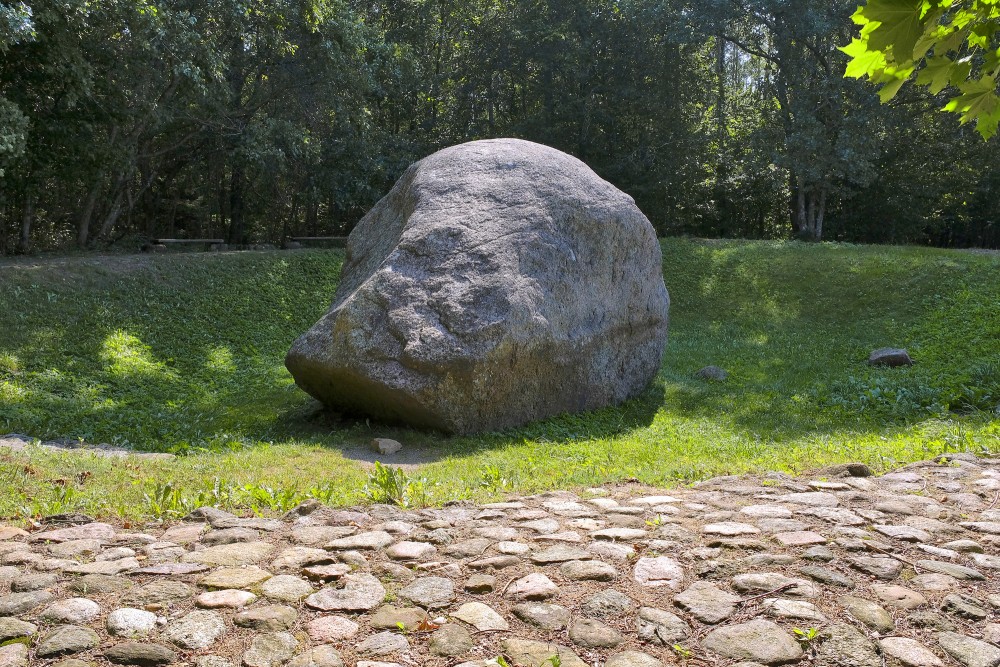
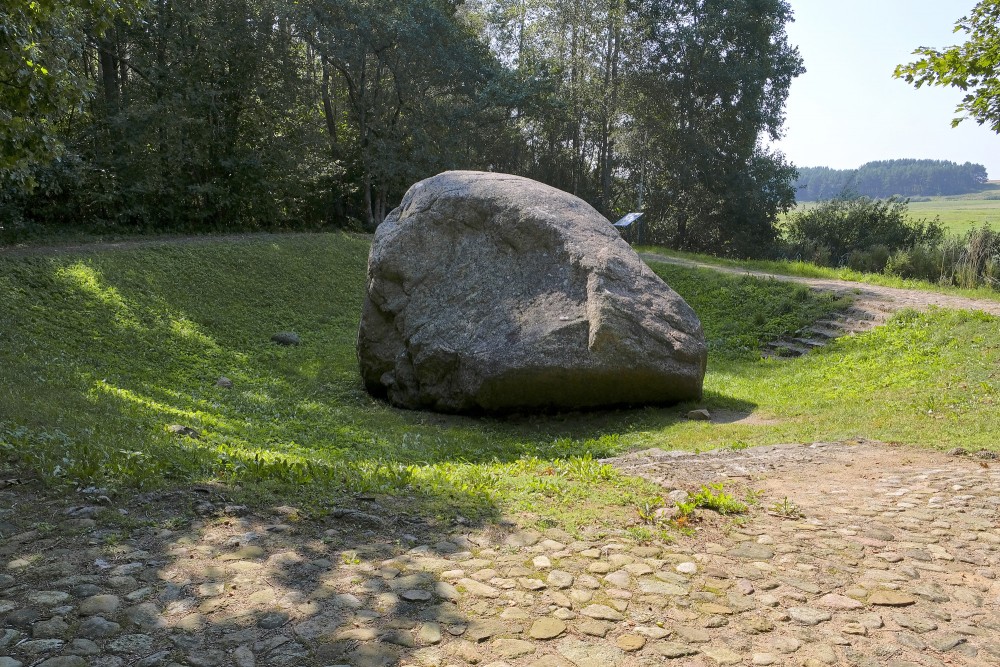
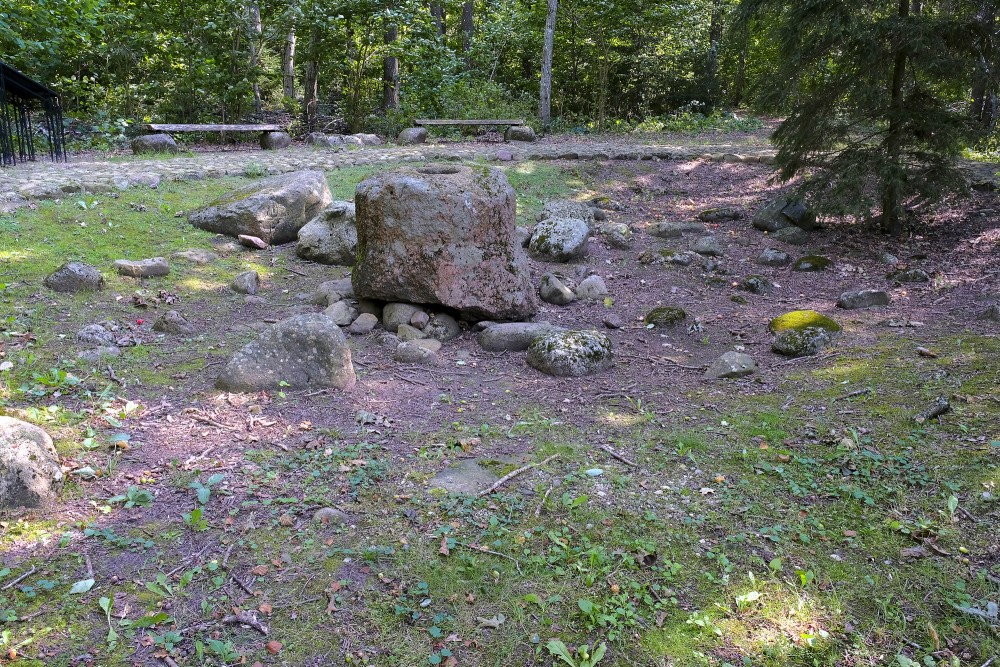
Šilalės kūlis and the cup-marked stones is one of Lithuania’s most remarkable natural monuments, combining impressive geology with traces of ancient Baltic spiritual traditions. The Šilalės boulder is considered the fifth-largest stone in Lithuania and stands on a small hill once surrounded by wetlands. It measures approximately 3.66 m in height above ground, 7.48 m in length, 5.48 m in width, and reaches a circumference of over 18 m. The rock is made of a distinctive type of granite known as rapakivi, recognizable by its coarse texture and large crystals.
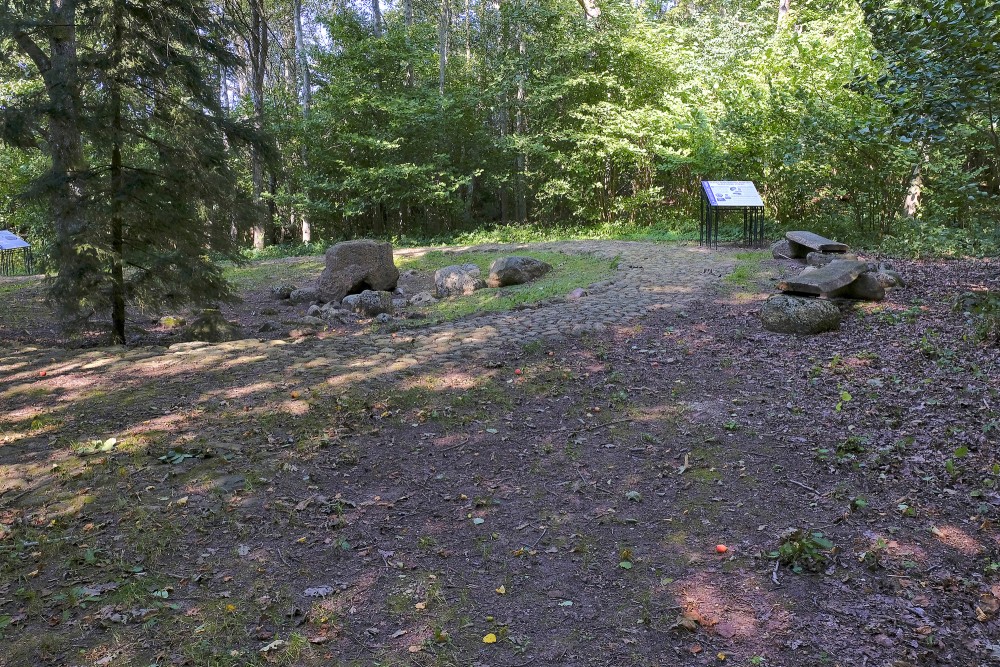
Nearby, visitors can also find the cup-marked stones (stones with carved bowl-like depressions), which are believed to be connected to ancient ritual practices. Historical and archaeological notes suggest that the area may have hosted a pagan sanctuary around the 16th–17th centuries, including a hearth and a stone altar. The site’s atmosphere is enriched by the landscape itself — in earlier times, a stone-paved path known as a kūlgrinda crossed the surrounding marshes, leading toward the village and strengthening the impression of a secluded sacred place.