History
The windmill is located in Saka Parish, South Kurzeme Municipality (formerly Pāvilosta Municipality). It was built within the territory of the former Minde Estate (Münde), from which it derives its name. The estate and its industrial structures were historically linked to the development of the local river networks and coastal trade routes. During the Latvian agrarian reforms of the 1920s, the estate lands and utility buildings were subdivided into new smallholdings or transferred to local enterprises.
Architectural Features
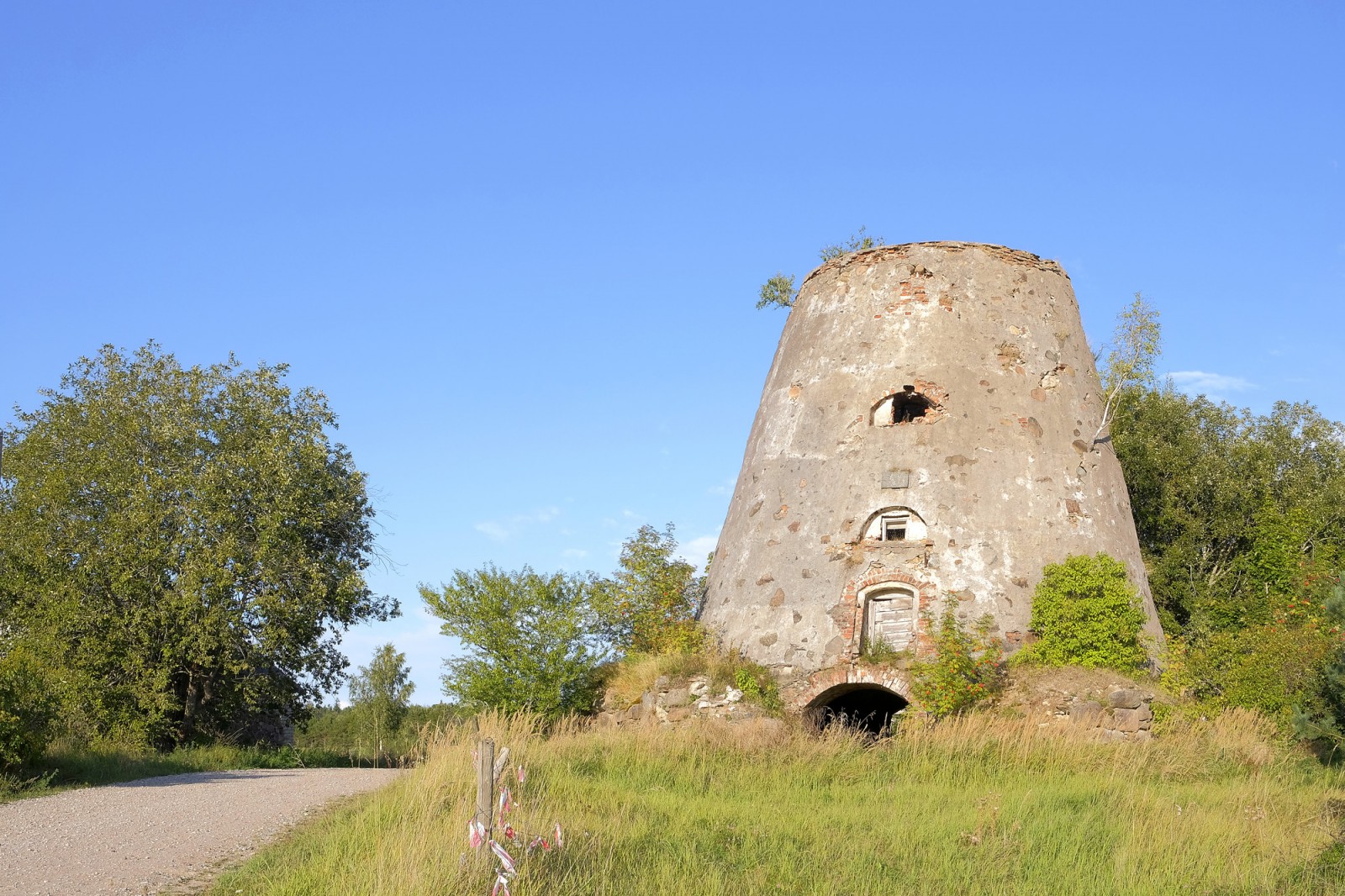
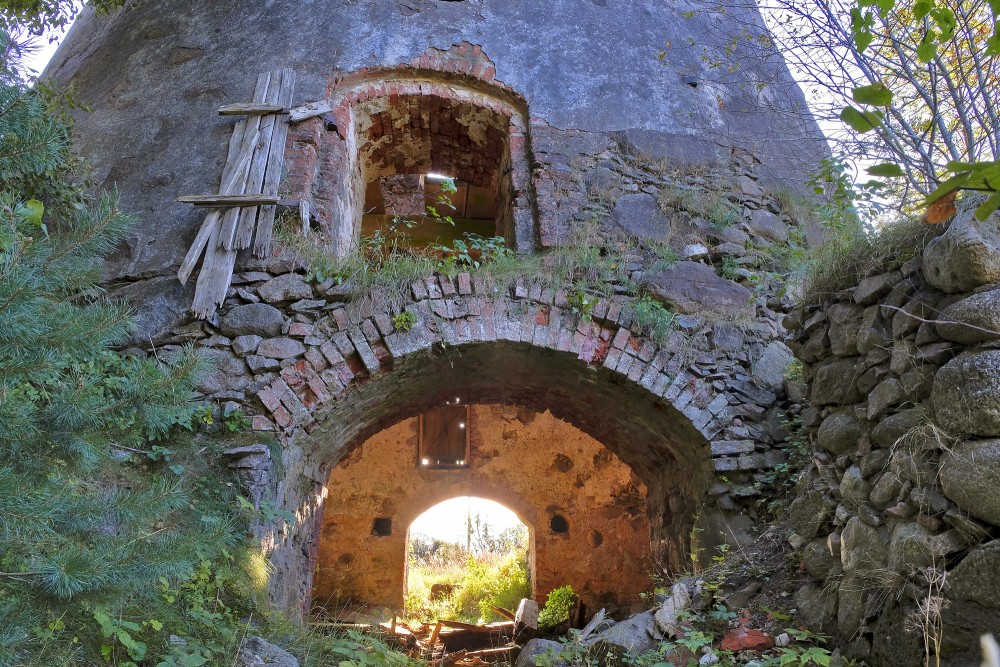
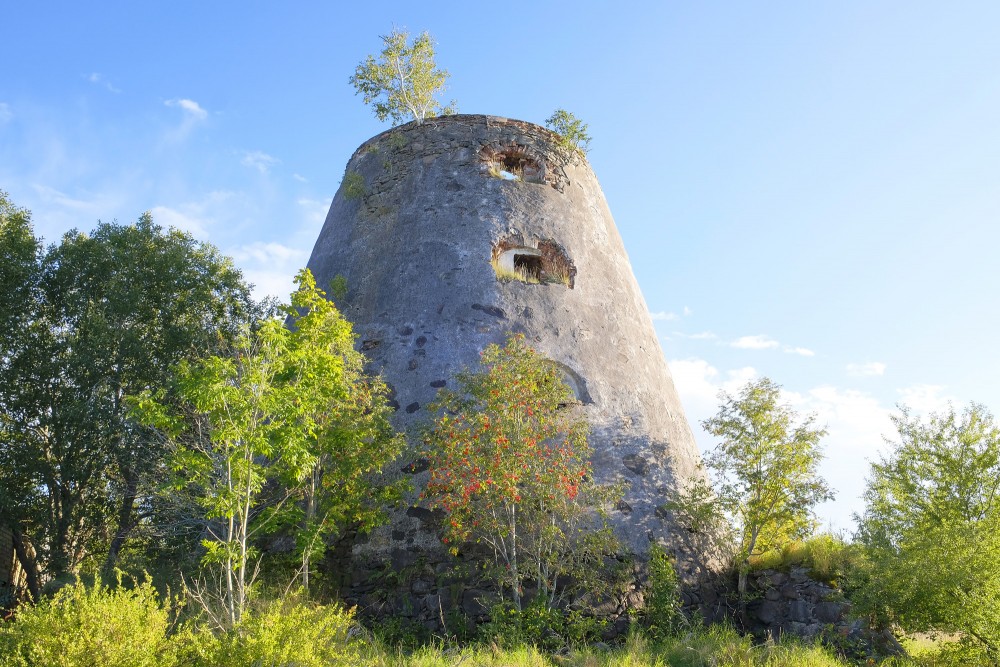
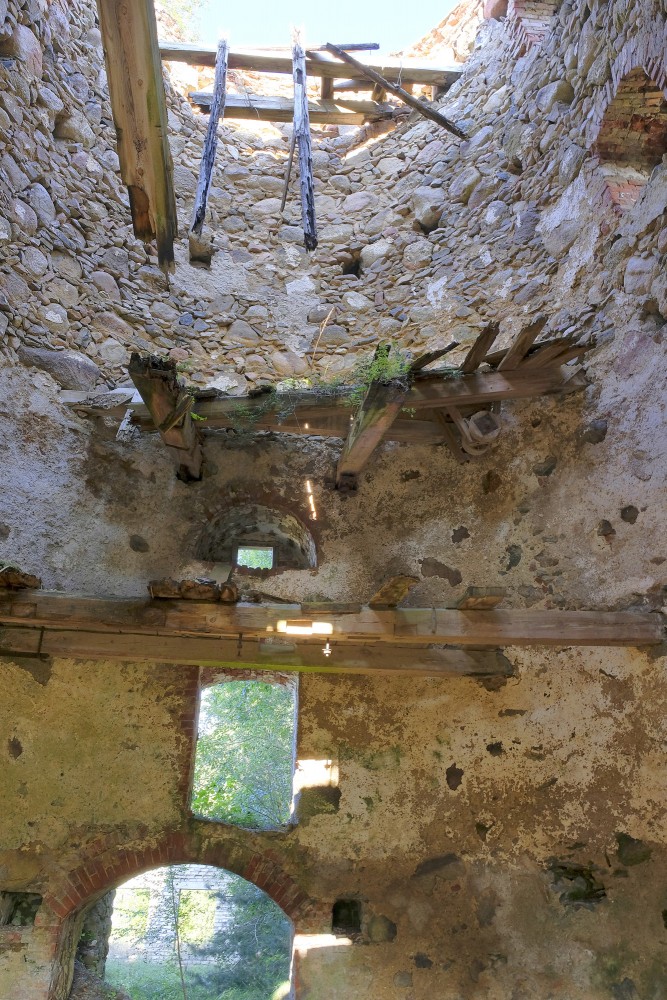
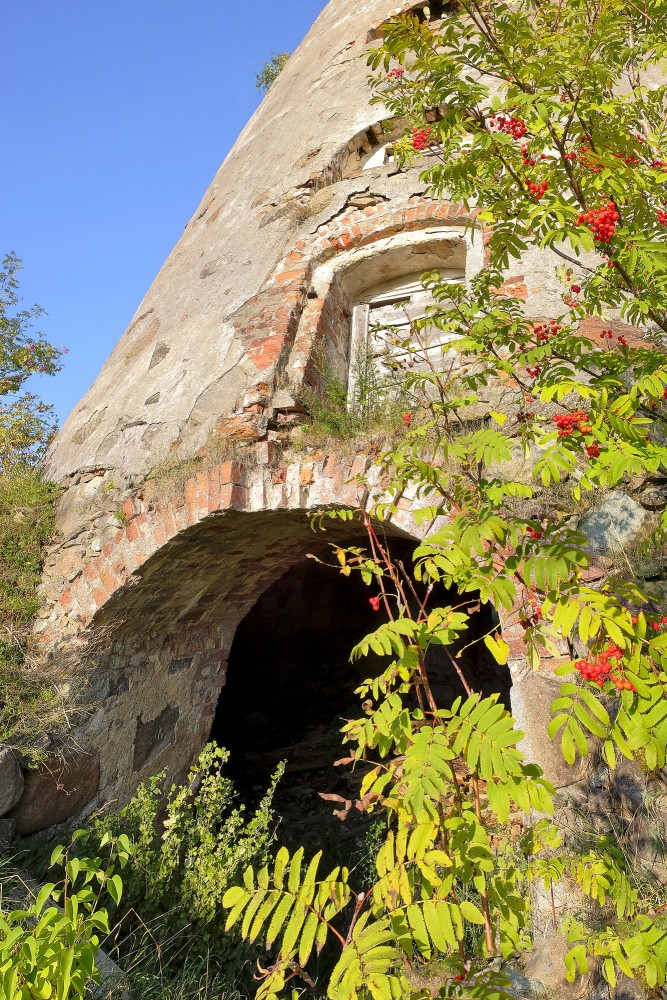
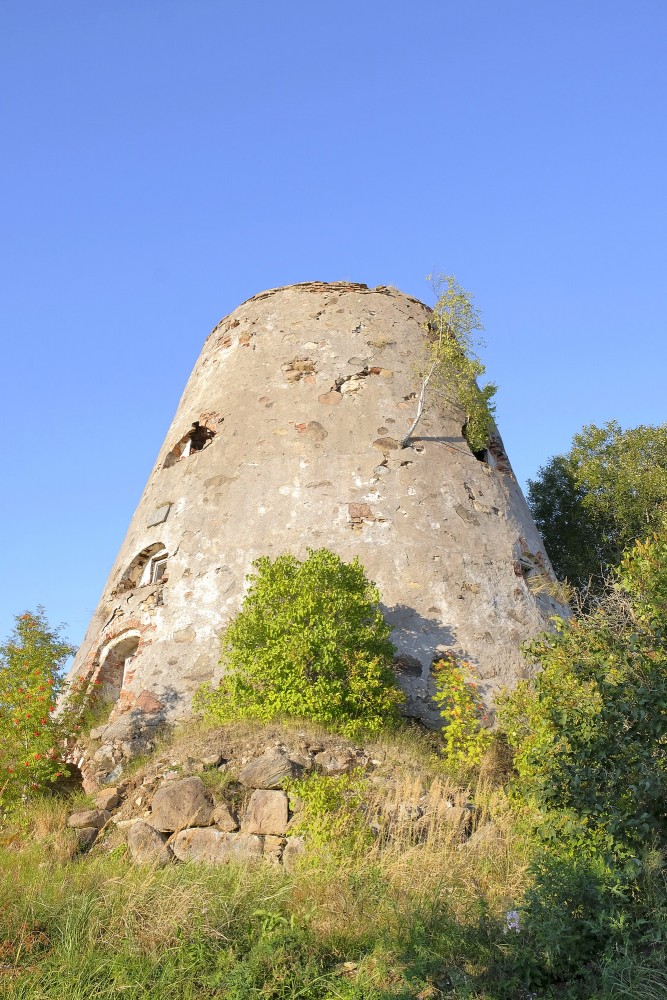
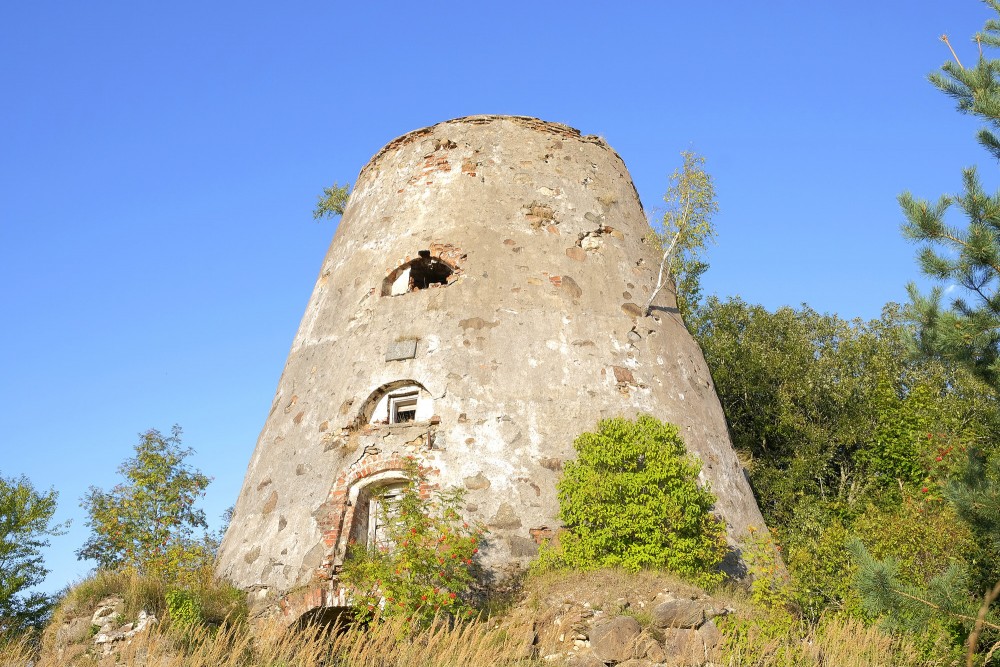
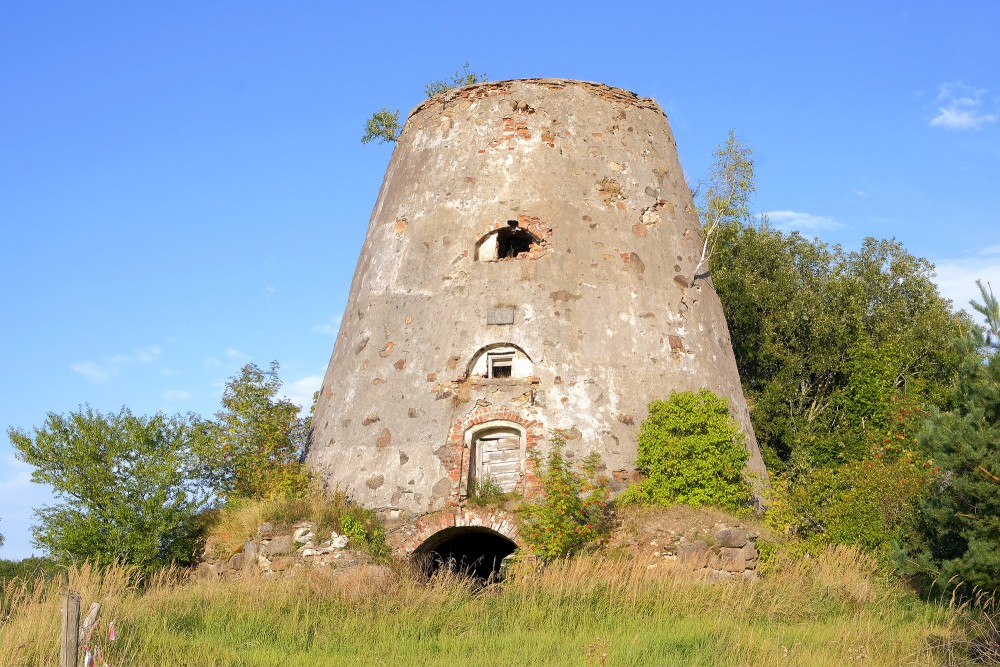
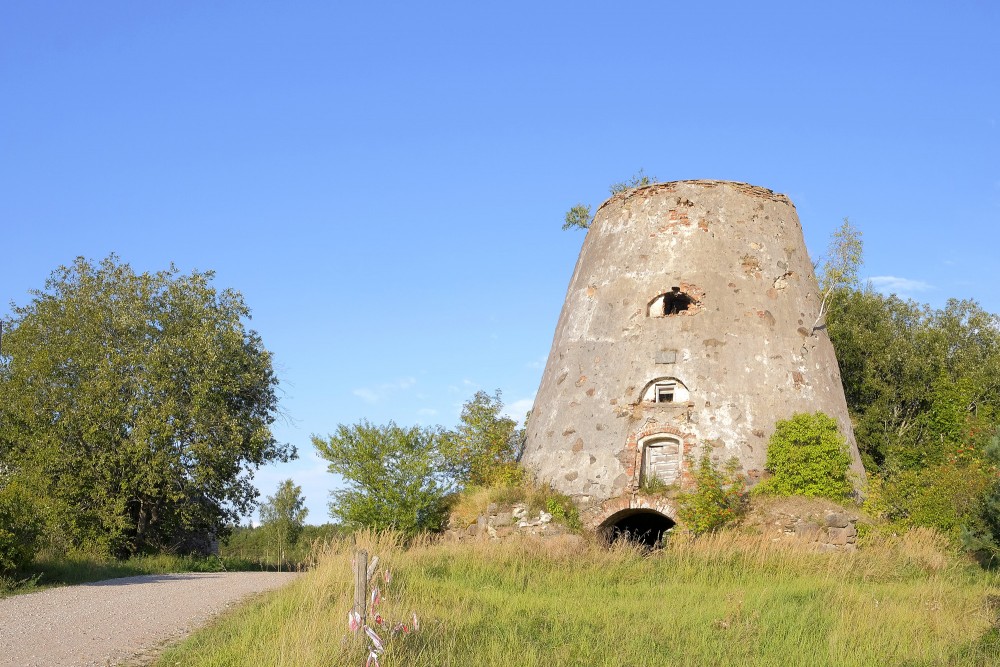
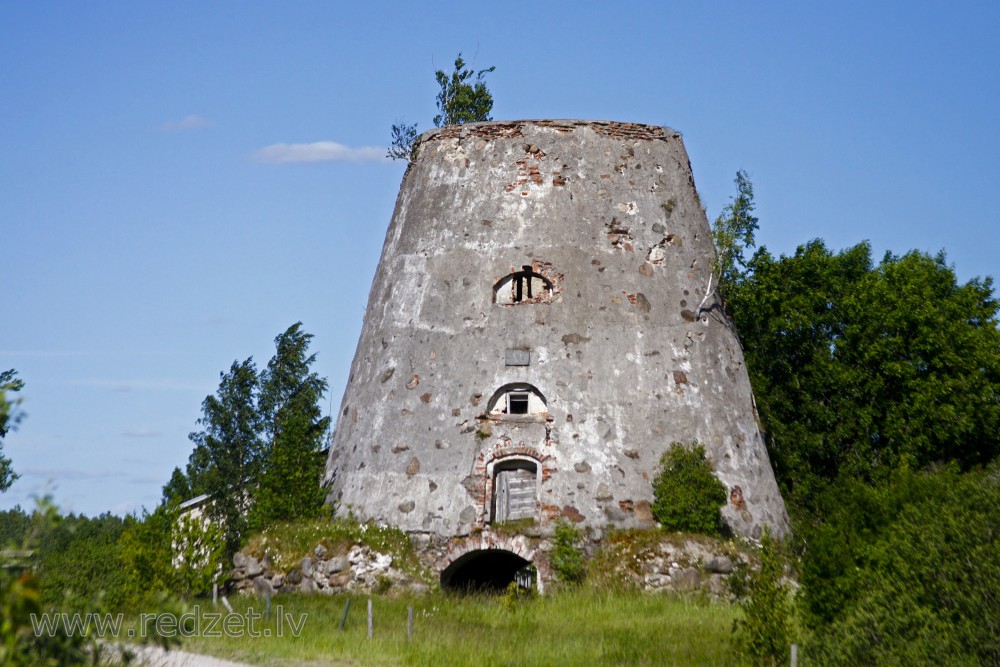
The Minde windmill belongs to the traditional Dutch-type category. Its core structure consists of a massive, conical masonry tower built from local fieldstones and bricks. Characteristic of this architectural style, only the top wooden "cap" holding the sails was rotated to face the wind, while the heavy stone base remained stationary. Today, only the historic masonry shell survives; the sails and internal wooden milling mechanisms are no longer present.
Modern Function
Currently, the windmill is a privately owned property. It no longer fulfills its original agricultural purpose of milling grain, but stands as a regional cultural and historical landmark in the landscape near the Saka River, serving as a visual testament to the historical estate economies of Lower Kurzeme.
Interesting Facts
-
The name of the Minde estate, and subsequently the mill, stems from the German word "Mündung" (mouth/estuary), as the historic estate center was strategically positioned near the point where the Saka River meets the Baltic Sea.
-
Located just roughly 3 km from the town of Pāvilosta, the windmill structure coordinates with other nearby cultural heritage sites along the Saka River valley, including the Saka hillfort and medieval castle ruins.