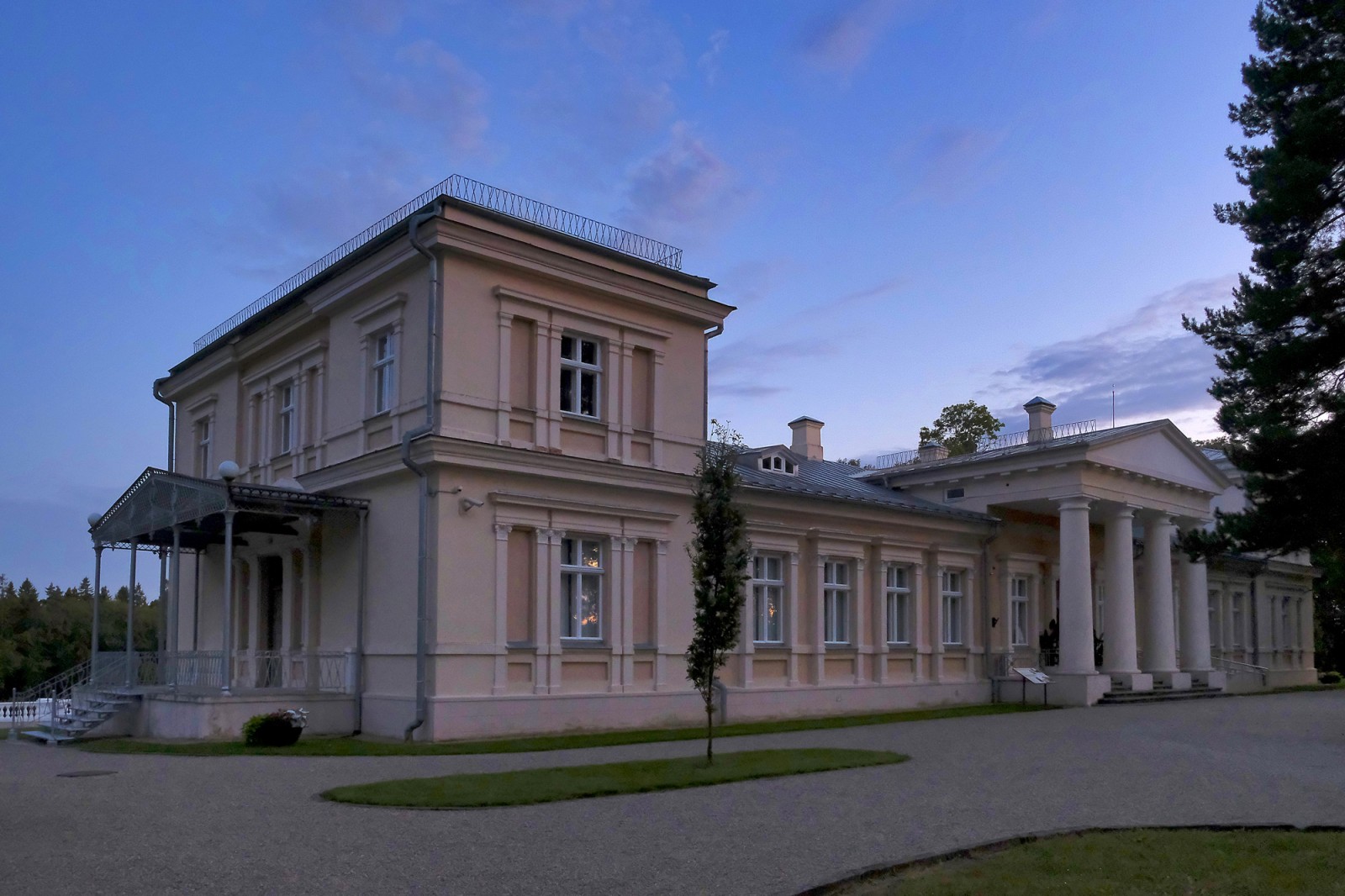
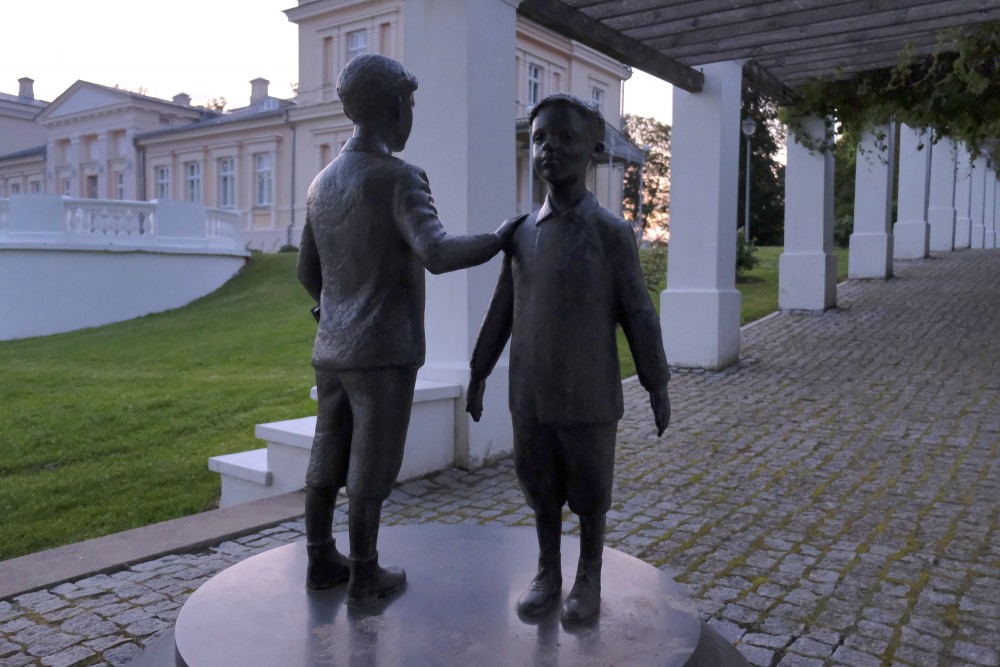
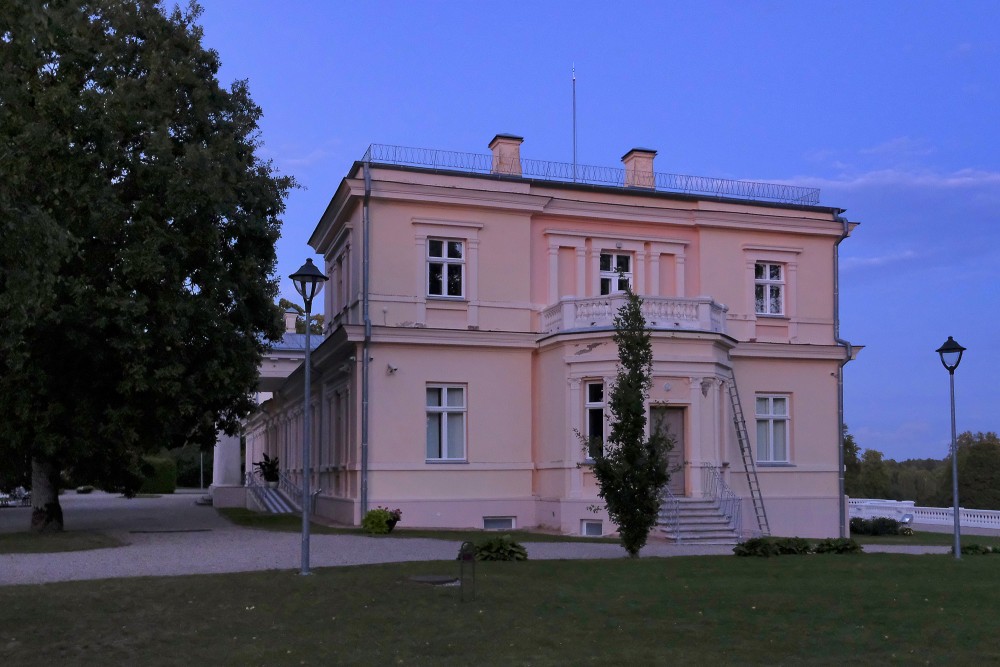
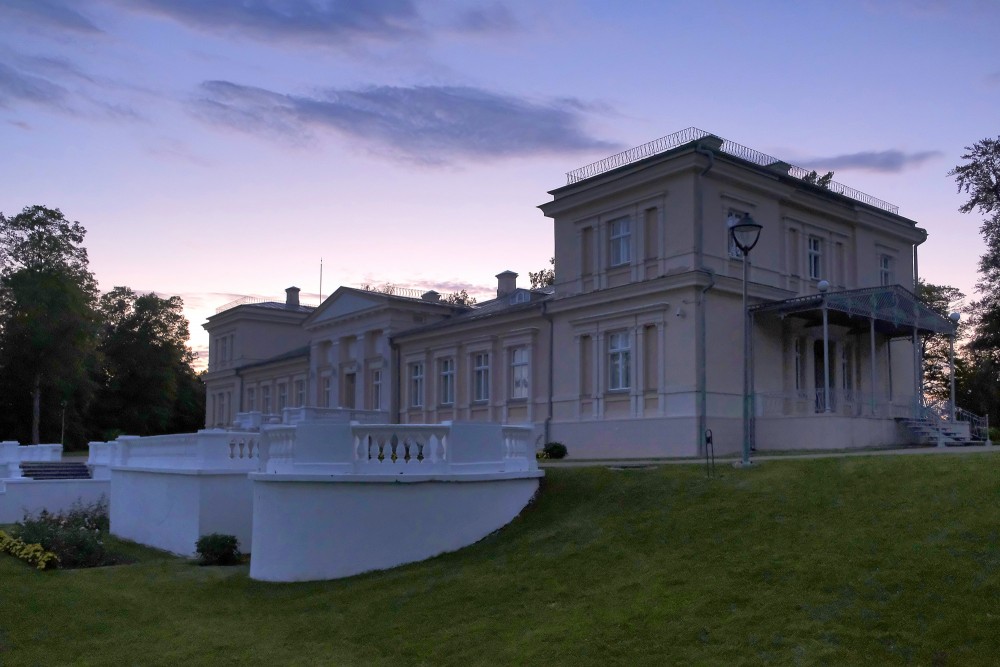
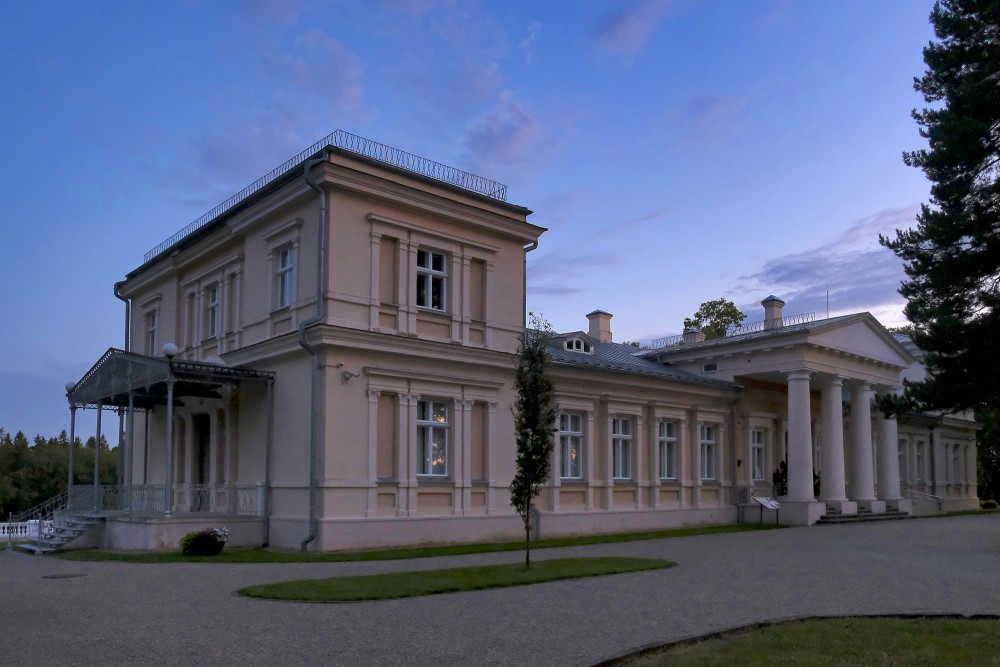
Renavas Manor (Renavo dvaras) is considered one of the most interesting and best-preserved manor ensembles in the Samogitia (Žemaitija) region of Lithuania. It is located in Renavas village, within the Seda eldership of the Mažeikiai District, in a picturesque setting along the banks of the Varduva River. The manor and its surrounding park create a unique cultural landscape where architecture, history, and nature come together in a harmonious way.
Written sources mention the estate as early as the 16th century, when the manor was described as a wooden building with a thatched roof. Over time, the property developed into a significant local centre, reflecting the growth of noble estates in the region and the changing patterns of land ownership and rural life in Lithuania.
The present-day Renavas Manor House (palace) was built in 1830–1833, initiated by the estate owner Antanas Renė (Rönne). This period marked the formation of the manor ensemble that is now considered one of the most distinctive preserved noble residences in the Samogitia region of Lithuania.
In terms of architectural character, the manor house is attributed to Late Classicism, while some sources describe it more broadly as Neoclassicism. The style is expressed through a balanced and refined composition, emphasising symmetry and harmonious proportions rather than heavy ornamentation.
The building is a brick (masonry) residence. It was originally constructed as a single-storey manor house, and later two-storey wings (flanking annexes) were added at both ends, expanding the overall layout and giving the residence a more monumental appearance. The manor house stands in the northern part of the estate, serving as the central architectural focus of the entire complex.
The manor gained particular recognition during the 19th century, when it became associated with the Rönne (Renė) family and later with the Mielżyński family. Historical accounts emphasise the importance of cultivated gardens and an evolving park landscape, showing how Renavas became a refined example of noble estate culture in north-western Lithuania.
One of the most valued features of Renavas Manor is its authentic interior, especially the preserved atmosphere of a historic manor library, which offers visitors a glimpse into the intellectual life and everyday environment of the estate. Today, the manor functions as a museum and cultural space, where the rooms, furnishings, and exhibits help recreate the spirit of 19th-century manor living.
The manor park is also a highlight for nature lovers. It is known for remarkable natural monuments, including the thickest Norway spruce in Lithuania, often referred to as the Renavas spruce, as well as other impressive old trees that enrich the scenic character of the site.
Nowadays, Renavas Manor is open to visitors and continues to serve as a living heritage location, hosting exhibitions, educational activities, and cultural events. It is an inspiring destination for anyone seeking a peaceful yet meaningful encounter with Lithuania’s manor history, landscape traditions, and regional identity.