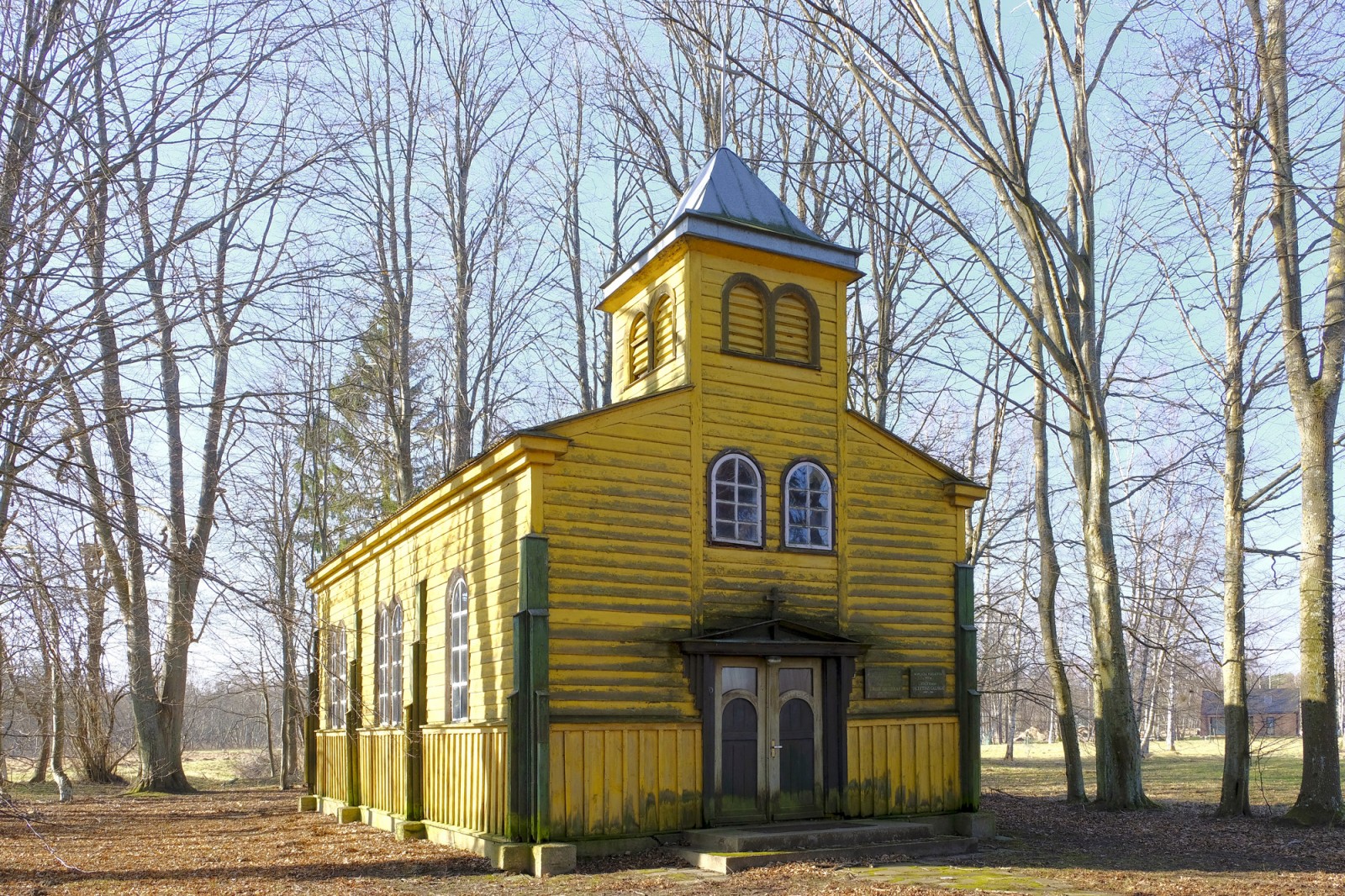
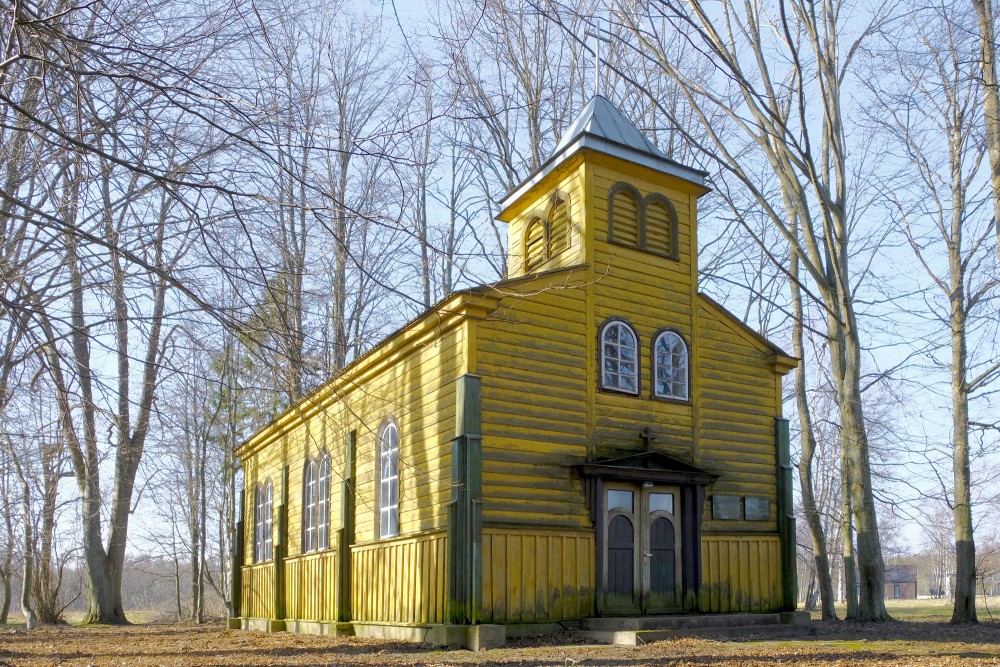
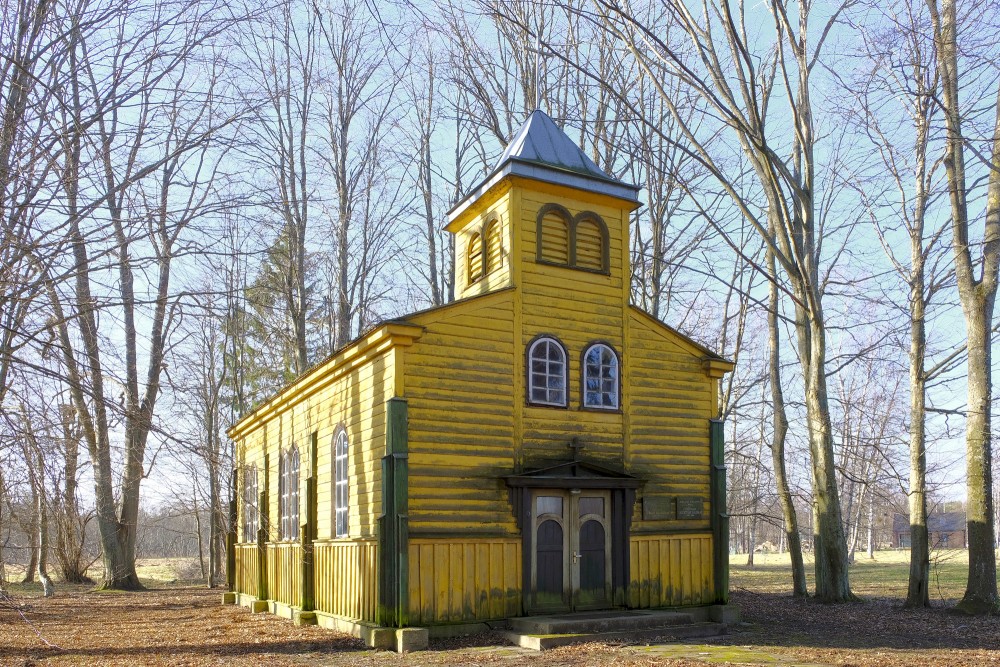
The Šventoji Chapel of the Blessed Virgin Mary, Star of the Sea (Šventosios Švč. Mergelės Marijos Jūrų Žvaigždės koplyčia), also known as "Stella Maris," is a significant cultural heritage site built in 1931. Its construction was initiated and funded by Canon Jurgis Galdikas and his brother Valentinas Galdikas. The chapel was consecrated on July 12, 1931. Interestingly, this small sanctuary became the foundation for the entire Catholic parish of Šventoji, as there were no other places of worship in the town at that time.
Architectural Description and Interior
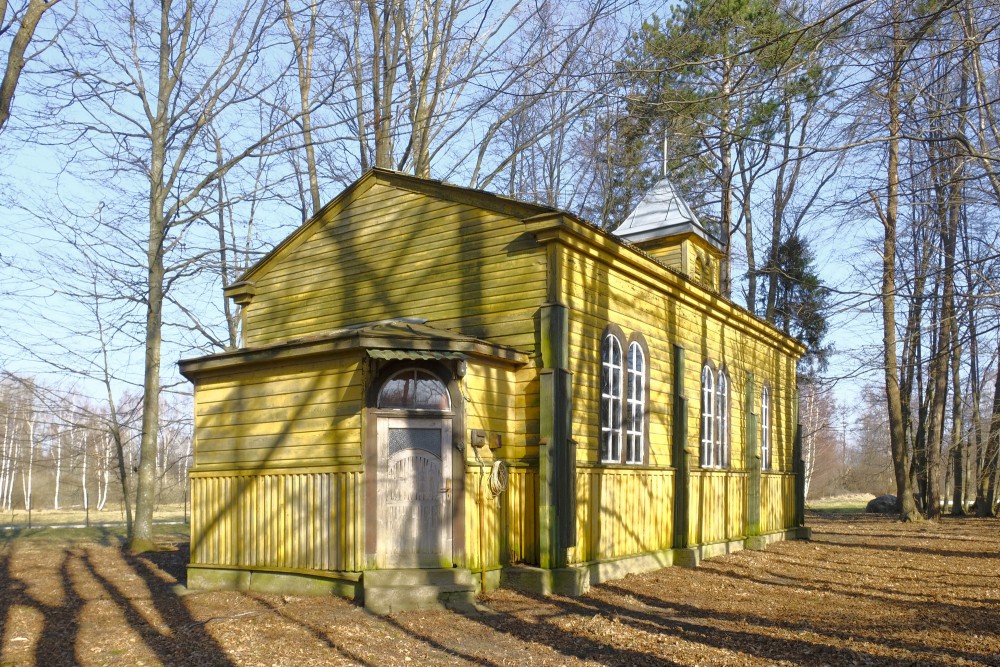
The chapel is a classic example of folk architecture—it is built of wood, painted yellow, and stands out for its simplicity and coziness. The building is a rectangular, single-nave structure with a small tower on the main facade and an attached sacristy.
Exterior: The walls are clad with wooden boards, and the roof is covered with galvanized tin. A four-sided tower with a bell rises above the main entrance in the center of the facade.
Interior: Inside, the ceilings are curved and lined with wooden planks, creating a warm, cozy atmosphere. The choir loft and bell tower are supported by wooden columns, while the altar area is separated by a delicate, carved wooden railing.
Unique Treasures and Symbolism
The chapel houses several valuable relics that are older than the building itself. One of the most remarkable objects is a brass bell dated 1608 (cast by Marcus Ulman from Königsberg). This bell is one of the oldest in the entire region, even older than the bells of the neighboring Palanga church. Above the altar is an artistic painting "Stella Maris" dedicated to the Virgin Mary—the patroness of sailors. According to legend, local fishermen commissioned this painting as a token of gratitude for surviving a terrible storm in the Baltic Sea.