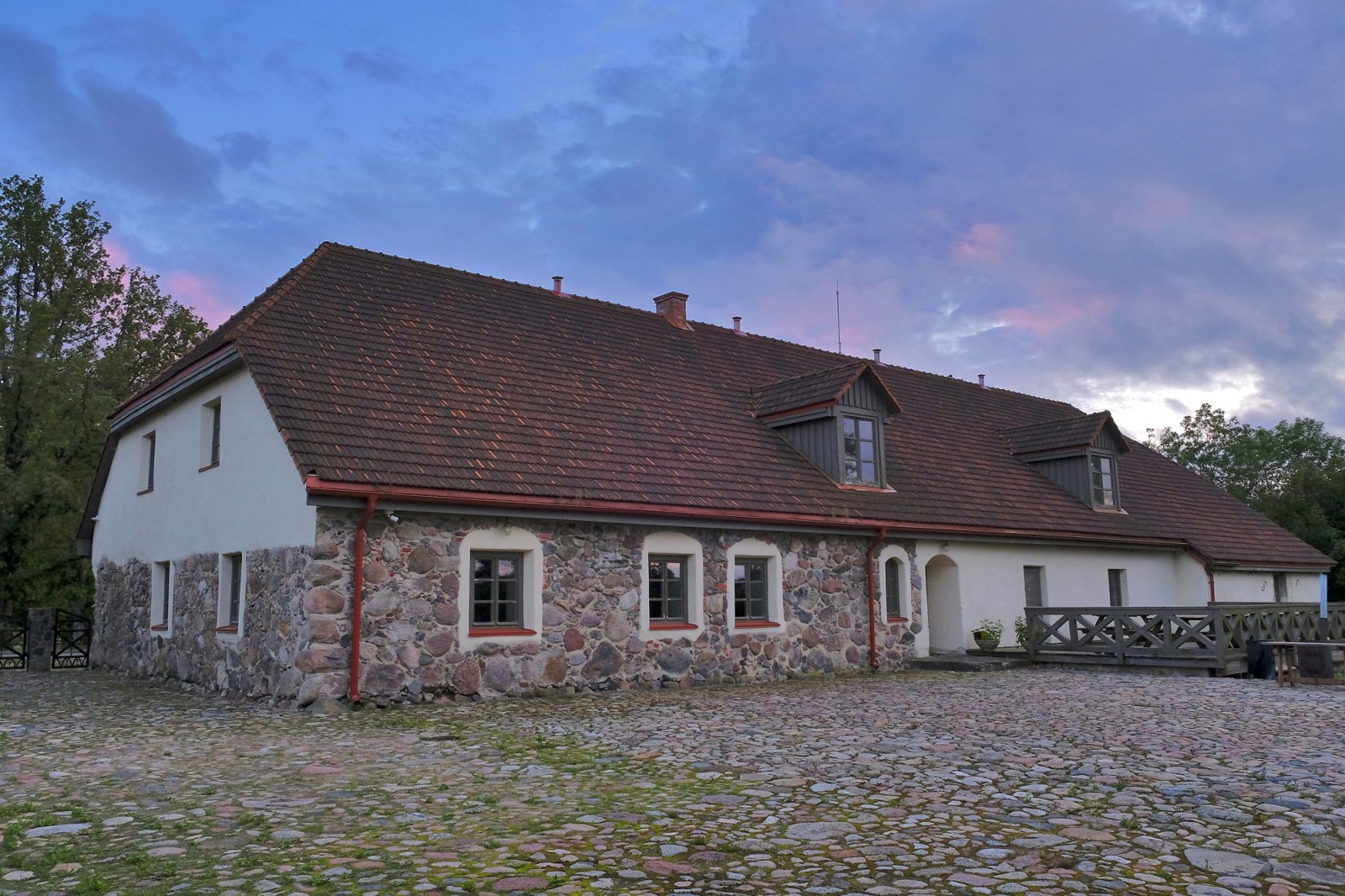
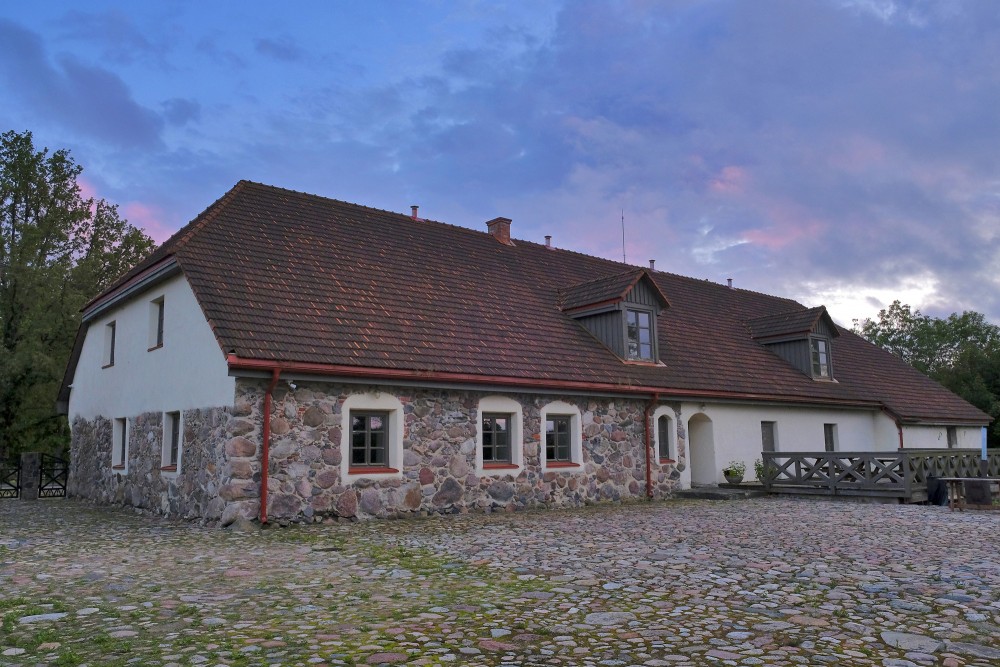
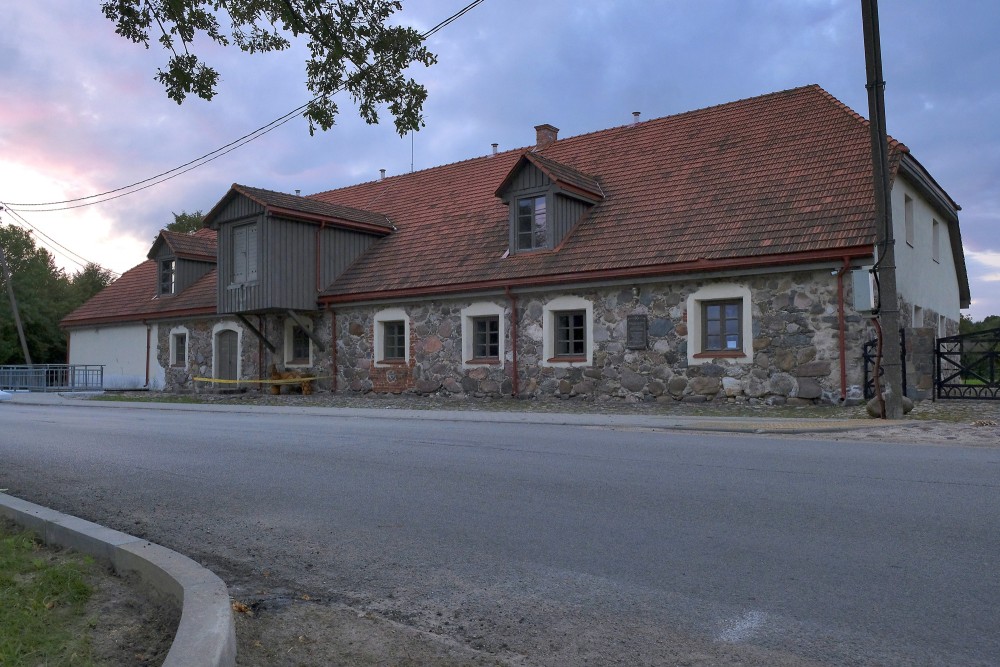
The Seda Water Mill (Lithuanian: Sedos vandens malūnas) is a remarkable piece of historical industrial heritage located in the historic part of Seda, in Mažeikiai District, Telšiai County, Lithuania. The former mill stands by the Varduva River canal, roughly 230 metres south-east of the Seda bridge, offering visitors a strong sense of the town’s traditional riverside landscape and working past.
The site has long-standing historical roots. Sources note that a manor mill and dam in Seda (linked to the Sapiegos/Sapieha estate) were already mentioned as early as 1613, originally built from wood. Later, during the first half of the 19th century, a brick-built mill was constructed in its place, reflecting both technological development and the growing importance of milling for the region’s economy.
A particularly vivid glimpse into its past comes from an 1848 manor inventory, which describes the mill as having three millstones, and even includes living quarters for the miller in the same building, with several rooms and domestic facilities.
Architecturally, the mill is described as an elongated rectangular building with one storey and an attic, with the eastern part of the structure spanning the water canal fed from the Varduva River. Its foundations and walls are made of brick and stone masonry, and in later years the mill was even adapted to be powered by electricity, showing the gradual transition from traditional water power to more modern energy sources.
Recognised for its historical and architectural value, the Seda Water Mill was entered into Lithuania’s Cultural Heritage Register in 1997. Today the site continues to evolve: the renovated building hosts the Daily Art Gallery in Seda, giving the former industrial structure a new cultural role and making it an inspiring stop for visitors interested in both heritage and contemporary local creativity.